Monday, 28 July 2014

Singapore and Malaysia Tolls

470% Toll Hike for Class 1

Malaysian Highway Authority (LLM) announced all vehicles (including Malaysian cars) passing through (Bangunan Sultan Iskandar Customs, Immigration and Quarantine (CIQ) will be paying a higher toll charge from 1 Aug 2014.

For sedan cars travelling to JB and back to Singapore, the hike is 468.97% (RM2.90 to RM16.50).  The breakdown is RM9.70 for inbound and RM6.80 for outbound.  Malaysian cars are no exceptions.

CurrencyMYRS$%
ClassOld (inbound)New (inbound)New (outbound)Total NewNet IncreaseIncrease
1RM2.90RM9.70RM6.80RM16.50RM13.60$5.33468.97%
2RM4.50RM14.70RM10.20RM24.90RM20.40$8.00453.33%
3RM6.10RM19.70RM13.60RM33.30RM27.20$10.67445.90%
4RM1.40RM4.80RM3.40RM8.20RM6.80$2.67485.71%
5RM2.30RM7.80RM5.50RM13.30RM11.00$4.31478.26%

Malaysians who travelled to Singapore to work daily and drive back to sleep are heavily slapped on the new hike.  If you are not aware, the morning queue into Singapore at both customs are very bad as many Malaysians are rushing in as early as 4:30am.  Some Singaporeans who have relocated to Malaysia are also commuting into Singapore to work daily.

Another increase coming: Vehicle Entry Permit (VEP)

The above toll charges are not to be confused with VEP, which is only meant for foreign vehicles (such as Singapore cars).  Since Singapore government has announced the new VEP rate of S$35.00 for non-Singapore vehicles entering into Singapore, Malaysian government has not fixed the price yet.

Coming next: Eastern Dispersal Link (EDL) Toll

At the moment, EDL is still free for use.  EDL is useful for driving direct to KL or nearby cities bypassing the crowded Johor Bahru city area.  So far, no toll has been announced but it is always on the chart for extra income.  Even Malaysians are confused why the new toll hike is presumed to supplement the construction of EDL in 2003.  Let's wait for more details.

Conclusions

So far, it seems S$5.33 increase (Total: S$6.47) is still affordable for many Singaporeans.  With the 3/4 fuel tank restrictions, either you stop going in or you can just buy and eat more to make up for the S$5.33 toll before you pay more to drive into Malaysia.  Once the VEP details are clearer, we will update the new rates for reference.

To find out how much you save, Enter your details below.  We will send a personalised email on the precise savings you enjoy based on your inputs.

Friday, 21 February 2014

JB for petrol?

Update: The latest changes on the new Toll Rates for Johor Causeway effective 1 Oct 2014 is reflected in the calculation.

50% cheaper?

Did someone tell you that Malaysia's petrol is at 50% discount as compared to Singapore?  It is as attractive as the Great Singapore Sales (GSS)!!!

With this belief, many are faithfully and patiently queuing up driving north just to top up petrol believing that they are saving money especially when the exchange rate is at Singapore's favour.  Especially now with S$1 = RM 2.61.

Indeed, petrol is termed as the black gold and the world's supply of petroleum is now lower than the world's demand.  Though Singapore is a world famous refinery centre of oil, the selling price of petrol is more than twice of its neighbouring countries.

Unfortunately, this may not be true if you check your wallet at the end of the month, the saving may even be LESS. Why?

Worth or not?


While you stop and move in jams when coming back to Singapore, have you wondered if it is worthwhile to drive up just to pump petrol and back?  Are they worth the 3 hours (inclusive of dinner) you spent in jams?

Every cars are different but the transport costs are similar:
  1. Travel from home/office to JB and back still consume petrol for the car.  If you stay in Woodlands, consider yourself lucky but for those who stay in Changi, you are paying more to drive to JB;
  2. Costs of tolls in both Singapore and Malaysia customs (PLUS card).  For second link, you have to pay again when you are driving back to Singapore;
  3. 3/4 tank legal requirement for Singaporean vehicle driving out of Singapore; and
  4. Fuel efficiency of your vehicle plays an important part especially if you are caught in jam.  With engine and air-con running, petrol are still being consumed even if the car is at a halt.
So there must be a purpose if you wish to drive north for petrol else the cons might outweigh the pros.

Classic examples

For instance, Alex (blog: http://loganized.blogspot.sg/2011/05/pumping-petrol-in-malaysia-how-much-do.html) was surprised that he had a saving of S$3.13 for a May trip in 2011.  If you look closely, he is gaining virtually nothing as he failed to factor in the toll charges imposed by both customs (~S$2.50).

If he wasted 2 hours in the jam, there is literally no saving if we factor in the depreciation of the car and its parts in the long run. There are many who have similar experiences and continue to drive in like Alex.  Are you one of them?

Some employed tilting of cars in attempts to pump more petrol (URL: http://www.sgwayoflife.com/forum/viewtopic.php?f=3&t=1536).  It claimed that pump attendants said the total saving is S$1.30 to S$2.20 for small/mid cars and S$4 for MPVs.  Is this working for you?

In Perspective


Instead of guessing and listening blindly, it is good for us to know what are the actual savings we have if we just go JB for petrol.  We are pleased to offer you a one-time offer to calculate your savings by entering your details below.

Please give us 3 working days to get back to you as we are not working full time on this blog.

Know your mileage. Know you savings.  We hope everyone can benefit from this exercise.

Tuesday, 13 March 2012

SSD vs HDD – Why you should choose SSD over HDD for Win7?

Before you buy i7 and the best graphic card in the market, read this.

I know desktops are dying and are currently being replaced by tablets and mobile phones.  But I believe they will last for another 10 years as they fill the vacuum between server and mobile phone where we need reasonably strong computing power and a big screen comfortable to the eyes.  On the side note, in the long run, I predict many youngsters will develop arthritis, wrist/thumb issues and short sightedness as they relentlessly try to “break” the Corning’s gorilla glass while playing their game or replying messages.

Coming back to the topic, costs for desktop are dropping dramatically and it is realistic to buy a desktop (without a monitor) with a budget of S$600.  If you have a comfortable budget for S$1,000, then you must consider adding a Solid State Disk (SSD) into your system to remove the biggest bottleneck of any computer.  I also strong recommend this if you wish to upgrade your notebook hard disk.  Let me share the generic advantages of SSD:
  1. Withstand shock and vibration because there are no mechanical parts.  For a notebook, it implies you can drop notebook on the floor and your data is still intact;
  2. It saves power consumption as it draws only 1 Watt instead of 6-8 Watt (quite little as compared to 300 Watt video card);
  3. You enjoy faster startup or boot up speed; and
  4. Most importantly, your computer works faster.
How fast?  Is SSD worth it?

If you are getting a low-end or budget PC, forget about SSD.  But if you can chalk up S$1k, why not spend another $150 to speed up the slowest component of your desktop?  The question is how fast?

If you take a standard 7200rpm HDD versus a low-end Intel X25-M SSD, you can see that SSD outperforms HDD in all aspects especially in random read speed.


HDD (Mbps)
SSD (Mbps)
SSD over HDD (times)
Sequential Read
77
260
3.38
Sequential Write
80
107
1.34
Random Read
0.7
64
91.43
Random Write
0.8
48
60

Now, sequential is useful for transfer, copy or move files of large size.  The faster the sequential speed, the shorter you wait.  Three time faster means time saving and you can feel it in real time.  For operating system, the key indicator of a responsive system is RANDOM WRITE.  SSD performs 60x faster so it is significant in real world.

All you need for a SSD is put an operating system (like Windows 7) into it.  If you install a new Windows 7, you will notice you need approximately 12GB of space.  However, Windows will grow due to its reserved space, restored point or buffers over time.  You may also add frequently used applications for faster speed.  Buffering what you need, you do not need 128GB or 240GB SSD.  If you tap on cloud storage, 30GB or 40GB is sufficed.  You can add 1TB or 3TB as additional storage.  For notebook, you may want a bigger SSD as there is only one slot for 2.5” HDD.

What take the trouble of getting small SSD?  The reason is simple – SSD is expensive.

Dell has an article about why they find SSD is too pricy and they offer no SSD online in Singapore.  NAND flash pricing has dipped significantly over the years since the invention of usb drives and the popularity of iPhone, iPad and all NAND flash devices.  The price point may remain stagnant due to the loyalties of the flash inventors as there is a minimum price point they are looking at.  But the higher capacity flash will definitely be cheaper in the long run or the patent expires.

Web-Feet Research has been following on the trend of SSD and below is the summary:

Cents/MB
2004
2005
2006
2007
2008
2009
Diff
HDD
0.139
0.111
0.091
0.077
0.06
0.04
71.2%
SSD
34.7
18.6
9.6
5.1
2.6
1.2
96.5%
*: Prediction

From 2004 to 2009, SSD’s pricing fell more than HDD’s.  Still bigger HDD can never win SSD in any performance tests.  So SSD has the unique selling point – better user experience.  No tweaking or optimizing of any HDD can outperform a budget SSD.

Okay. What is the catch?

SSD has limited write cycles and frequent writes will kill it faster.  Getting a SSD with trim working under a supportive operating system (ie Windows 7) which optimizes and recognizes SSD is important to prolong its life.  Preventing excessive writes in SSD is also important so disabling restore point and saving files in C drive etc will definitely help.

After you have used SSD, there is no turning back or regret.  I promise.  All your programs are running in steroid mode!  With SSD, it is faster with i5 over i7 (without SSD).  Vice versa, the fastest graphic card cannot remove the bottleneck the HDD inherits.  So get a SSD rather than i7 or the fast graphic card.

If you have some time or extra cash, you may like to pair 2 SSDs in RAID 0 for a 10 sec boot up.  Meanwhile, download SSD Tweaker for easy configuration in Windows 7.  Do share if you have other tips on SSD.

Monday, 31 October 2011

iPhone 4S Craze?

I have not been posted for a while due to other commitments.

The first post will be iPhone 4S. Since Steve has just passed away and he is missed by many, it will be a good time to see if Apple has products to continue his legacy.

There are minor updates to iPhone 4 but 4S has breaking sales due to the demise of Steve. What are the interesting features which many found it useful? Some of the features are:
  1. Siri - a voice app that aims to be your personal secretary;
  2. Speed - dual cores which nearly double the benchmark and chipset is upgraded to A5;
  3. Camera - 5 element lens and 30% improved sharpness on a 8MB resolution with video stabilization; and
  4. iOS5 - new OS with special mention of iCloud which promises 5G storage space in the cyberspace.
The question to ask is whether iPhone 4S breaks new ground or people just buy it for the sake of remembering Steve. Industry is disappointed it is not iPhone 5 but the sentiment defy expectation and sales better iPhone 4.

How is competition? Samsung Galaxy S2 is the closest competition with the chart HERE. A complete comparison is spelt out HERE in iTechVision. Numbers aside, the question is do you want to upgrade if you already has iPhone 4?

For those without data plan, it is a punishment to buy a iPhone 4S if you do not understand the true meanings of mobility and smartphone. Those who have already owned a iPhone 4 with a budget, it is not advisable to upgrade as the features are not fantastic. You can save for an iPhone 5. Apple is cashing in on Steve's death and maximise their profits.

If you never own a smartphone before, you may consider iPhone 4S. But before you jump into the wagon, spare a thought for other smartphone vendors like Samsung Galaxy S2 or Nokia N9. Both are cheaper than iPhone 4S and your experiences will not be dampened as long as you have a data plan (the key to your smartphone experiences).

You have lots to learn if you have your first smartphone. The key is the applications which you can install to suit your lifestyle with a data plan. In the world of social media, instant communication is the key to be hype. Getting a fad iPhone 4S with no data plan will be the biggest mistake you will make. Given limited budget, get a smartphone with data plan is better off than an expensive iPhone 4S with no data plan.

Frankly, technology gadgets are fads when the warranty is only 12 months for a 24-month standard mobile contact. The costs of the "free" phone has already been included in the monthly payment. When the warranty expires in 12 months, you are still paying for another 12 months for the discounted phone but enjoy no warranty for another 12 months. Isn't it interesting?

In Amercia, Apple's iPhones are tied up exclusively with AT&T with a cheapest US$15/month data plan for only 200MB of data. As a new customer, you are expected to pay another US$399 for a 64GB iPhone 4S. Bear in mind that the data speed is inconsistently low at a maximum of 2.5MBps at best with repeated upgrade on its networks.

In Singapore, Singtel's customers are expected to pay S$39.9/month for a 24-month plan for an upfront cost of S$798 for a 64GB iPhone. A new Samsung Galaxy S2 I9100 and Nokia N9 16GB cost S$148 and S$98 respectively. You do your maths.

For a die-hard Apple fan, you may consider the old iPhone 3 or iPhone 4 as they have depreciated to a "free" phone. The argument that Apple fans has is Apple provide long-term support for its handset while other vendors ignore their older phones when they have new models. Very true as we see iPhone 4 can be upgrade to iOS5 while many Android phones are still in Froyo 2.2 or below instead of the latest Gingerbread 2.3. In fact, non-Gingerbread phones are often sold at discount or free to consumers with a budget to clear stocks. Manufacturers offer no upgrade on its firmware and obsolete them before the 24-month mobile contract is over. It is a sad fact in the industry. Apple wins hand down in support since they have only a handful of mobile phone sets. Read more by The Understatement.

No matter what you choose, stocks for Samsung Galaxy S2 and iPhone 4S 64GB is low now. With plenty of stocks, Nokia N9 is the underdog as Meego OS may be obsoleted soon as the partnership with Microsoft thickens. The only merit of N9 is the free OVI GPS map where the download of maps is free.

Afterall, it is a Laissez-faire ecomony and the choice is yours.

Saturday, 10 April 2010

Increase in Electricity rate


UPDATE: Click HERE to download the file for easy calculations.

Household electricity consumption

I have covered the topic on how to measure your household electricity bill in my last article in May 2008. Since then, SP services never fail to increase electricity tariff for four consecutive quarters. Starting in April, our new rate will be 23.56 cents/kWh or an average increase of $2.47 in our monthly electricity bill in four-room HDB flats as reported by Straits Times. The latest reason cited is the increase in oil price over the past three months from US$99.38 to S$102.95 per barrel.

Ranking of power hungry household appliances

The best power saving method is NOT to switch on anything. We know it is impossible so how can you maintain or reduce your electricity bill? Identifying the most power hungry appliances and reduce its consumption is the best approach. Below is the typical list:
Ranking
Household Appliance
Power Consumption (W)
1
Bathroom Heater
2000
2
Induction Cooker
1200
3
Cloth Iron
1000
4
Water Boiler
750
5
Air Conditioner
600
6
Rice Cooker
500
7
Fridge
200
8
Desktop PC
160
9
CRT TV
135
10
Fan
60
11
Notebook
55
12
Light bulb
40


As a rule of thumb, appliances that heat up or cool down in the shortest time consume the most power. Bathroom heater tops the list with 2000W of power consumption while light bulb only consumes 40W. Appliances worthy of mention are Induction Cooker, Cloth Iron, Water boiler and Air Conditioner which are power hungry. To get a realistic feel of how much they are consumed, we need to know the hours of usage to get the monthly bill.
Household Appliance
Power Consumption/ unit (W)
Hours of usage/ day(Hrs)
Monthly Bill with GST (S$)
Ranking
Bathroom Heater
2000
1
15.13
3
Induction Cooker
1200
1
9.08
6
Cloth Iron
1000
0.5
3.78
8
Water Boiler
750
0.5
2.84
10
Air Conditioner
600
8
36.30
1
Rice Cooker
500
0.5
1.89
11
Fridge
200
24
36.30
1
Desktop PC
160
8
9.68
4
CRT TV
135
9
9.19
5
2 Fan
60
4
3.63
9
Notebook
55
4
1.66
12
3 Light Bulbs
40
5
4.54
7
Total Electricity Bill
134.01


After punching in the average consumption per day, we get a realistic power consumption of the appliances. Fridge and Air-Conditioner top the bill charges while notebook tails behind. To effectively cut down on the bill, we explore how to reduce the usage time of the appliances. Bear in mind that basic necessities such as fridge cannot be touched. Below are some suggestions:
  1. Use fans instead of air conditioner;
  2. Cut down on using Induction Cooker and use gas instead;
  3. Reduce the frequency of using bathroom heater;
  4. Iron cloth every fortnight. FYI, heating up the iron is very time consuming;
  5. Refrain from using water boiler to keep warm and use vacuum flask instead;
  6. Adopt standby or hibernation mode for breaks exceeding one hour; and
  7. Sleep early so watch less TV programs.
Household Appliance
Power Consumption/ unit (W)
Hours of usage/ day(Hrs)
Monthly Bill with GST (S$)
Ranking
Bathroom Heater
2000
1
15.13
2
Induction Cooker
1200
0.25
2.27
8
Cloth Iron
1000
0.05
0.38
12
Water Boiler
750
0.25
1.42
11
Air Conditioner
600
3
13.61
3
Rice Cooker
500
0.5
1.89
9
Fridge
200
24
36.30
1
Desktop PC
160
6
7.26
5
CRT TV
135
6
6.13
6
2 Fans
60
12
10.89
4
Notebook
55
4
1.66
10
3 Light Bulbs
40
5
4.54
7
Total Electricity Bill
101.47


After changing the consumption pattern, only fans cost more due to longer period of usage. If the fridge is your top list, then you have near to your target. Revised bill is $101.47 which is a 24.28% reduction in power consumption.

Conclusions

There are some devices (S$150) sold in the market which promise to save your electricity bill. The basic operation is to optimize the inductive and capacitive powers (correcting the power factor) which exist in any power supply due to different appliances used. This is especially useful for Air conditioner, washing machine and other inductive devices. In Singapore, the effect is noticeable for 5-room flat or bigger units but less significant in smaller HDB units. Suppliers claim that the savings vary between 5-25%. If you are interested, please attend computer show as they are always participating in such shows. Watch out for mini-sun or power save booths.
Now, you can save your pocket money and environment at the same time and preserve a greener earth for our future generations. I must talk big because cutting back on what you are currently enjoying is painful. Trust me…

Wednesday, 7 April 2010

MediShield Upgrade Comparison


Ward Selection for MediShield

UPDATE (31 Jan 2014): I have been very busy recently due to work commitment. Surprisingly, this file has more than 7,000 over download. I hope to update this in view of the recent talk about the pioneer package. Stay tuned.... and thanks again for your support.


UPDATE (18 Jul 2011): Thanks for your support. Near to 700 have downloaded and use this excel file to better their health plan. I welcome any constructive suggestions to better this file for future reference.

After posting the excel file (version 11), let's see what MediShield covers.
We shall compare the following scenarios below. You can punch in the data in the excel file to derive the same results.
Scenario
1
2
3
4
5
Room and Board (R&B)
24,200
24,200
24,200
24200
5,200
ICU
1,800
1,800
1,800
1800
0
Day Surgery
728
728
728
728
0
Implant
0
0
0
0
0
Days in R&B
52
52
52
52
5
Days in ICU
2
2
2
2
0
Total Hospital Bill
26728
26728
26728
6300
5200
Ward Chosen
C
B2
B1
A
B2
Age
50
50
50
50
50
Insurance pays
21885.2 or 81.88%
21735.2 or 81.32%
8336 or 31.19%
6914 or 25.87%
600 or 11.54%
You pays
4842.8
4992.8
18392
19814
4600


If you have only MediShield, staying in Ward B2 or C has its merits. This is an ideal case to show CPF MediShield can pays for 80% as intended.
Choosing Ward B1 or A will dramatically blow up your medical expenses as illustrated in scenario 3 and 4 respectively.
But wait a minute, how many of us spend 52 days in hospital?
A more realistic case is Scenario 5 whereby minor accident happens to us. Your feet swells without your permission and you stay only 5 days in hospital and the bill is only S$5,200 with no surgical operations. Now, you will be paying S$4,600 or 89% of the bill under MediShield. If luck is not on your side and you visit a hospital every 5 years, your MediSave savings will be easily depleted before you reach 80. When this happens, many suddenly realized that MediShield is insufficient and need a private plan to fill in the gap. Since private insurance excludes previous medical conditions, you will not be paid for heart related conditions if you have heart problem before you buy the private policy. Therefore it is imperative to buy the insurance before you develop any illnesses since most are guaranteed for renewal without questions. This is especially true because MediShield expects you to die before 86 as you have ZERO coverage when you are 86. Else, it ensures you die poor if you live beyond 86 because you will pay 100% of the medical bills.

An Ideal Private Insurance Plan

From my earlier blog, statistics showed that private insurance companies pay S$22 out of S$100 premium collected while CPF MediShield pays S$53 out of S$100. Claiming insurance may be one of the factors as there are many limitations and constraints especially the micro clauses in the contract dealing with historical medical conditions. But since MediShield has its weaknesses, you would like to maximize your money on a policy that pays the most and covers better than MediShield.
For full coverage (ie. zero payment), the premiums are expensive especially when you grow older. We have to access if we are able to afford the premium because it costs only $42/year when you are young but $7000/year if you are old. Without income after retirement, can you afford to pay the premium at old age? Many jump into buying policies that benefit them in the short term and forget that the premiums are much higher when they are old.
So the criteria for private Insurance are:
  1. It should be better than MediShield;
  2. It should pay most of the medical bills;
  3. In case of hospitalization, the insurance payout should be substantially higher against the premiums paid over the years (remember ROI?); and
  4. The policy should be affordable till old age.

Case 1 – Long Stay in hospital

Using the same scenario as above, MediShield (Ward C) shall be the benchmark.
Scenario
CPF MediShield
GE SupremeShield B Plus
Room and Board (R&B)
24,200
24,200
24,200
ICU
1,800
1,800
1,800
Day Surgery
728
728
728
Implant
0
0
0
Days in R&B
52
52
52
Days in ICU
2
2
2
Total Hospital Bill
26728
26728
26728
Ward Chosen
C
C
B1
Age
50
50
50
Deductible
1000
1000
2000
Co-Insurance
3042.8
2572.8
2472.8
Insurance pays
21885.2 or 81.88%
23155.2 or 86.63%
22255.2 or 83.27%
You pays
4842.8
3572.8
4472.8
Years policy is valid
10
10
10
Claims/Premiums
18.33
9.82
9.44


With Great Eastern Supreme Shield B Plus, it covers more for the same Ward C plan. Even if you upgrade to Ward B1, the medical bill foot by you is still lower than CPF MediShield.
If the policy is enforced for the last 10 years (or you have paid 10 years of premiums), the Claims/Premiums ratio will reveal the value of this policy. With lower premium and less coverage, MediShield has a score of 18.33. It implies that the medical claim covers the insurance premiums for the last 18.33 years. For GE Supreme Shield B Plus, both are near to 10 so it implies GE earns little from you.
We conclude that private insurance has its merits for long term hospital stay as it provides better coverage than MediShield. However, we need to compare the various plans to suit personal needs. You can now do so with the excel file.

Case 2 – Short stay in hospital

As illustrated above, MediShield is weak in pure R&B charges. Let's see how private insurances fare.
Scenario
CPF MediShield
AIA HealthShield Gold Elite
Aviva MyShield Plan 3
Room and Board (R&B)
5,200
5,200
5,200
ICU
0
0
0
Day Surgery
0
0
0
Implant
0
0
0
Days in R&B
5
5
5
Days in ICU
0
0
0
Total Hospital Bill
5200
5200
5200
Ward Chosen
B2
B2
B2
Age
50
50
50
Deductible
1500
1500
1500
Co-Insurance
150
370
370
Insurance pays
600 or 11.54%
3330 or 64.04%
3330 or 64.04%
You pays
4600
1870
1870
Years policy is valid
10
10
10
Claims/Premiums
0.5
0.75
1.53


Both AIA HealthShield Gold Elite and Aviva MyShield Plan 3 offer to pay 64.04% of the bill compared to MediShield's 11.54%. Now, with the Claims/Premium ratio, ceteris paribus, we see that Aviva MyShield Plan 3 is better than AIA HealthShield Gold Elite due to lower premiums.

Case 3 – Typical Surgical mid-term stay

Let's consider a case study of a mid-term stay with coronary artery bypass graft surgery (Example from Prudential website).
Scenario
CPF MediShield
Prudential PRUshield A+
NTUC Enhanced IncomeShield Basic + ASSIST rider
Room and Board (R&B)
5870
5870
5870
ICU
1630
1630
1630
Day Surgery
9000
9000
9000
Implant
2400
2400
2400
Days in R&B
7
7
7
Days in ICU
2
2
2
Total Hospital Bill
18900
18900
18900
Ward Chosen
B2
B2
B2
Age
52
52
52
Deductible
1500
1500
1500
Co-Insurance
369.75
1740
1690
Insurance pays
5726 or 30.3%
15660 or 82.86%
17010 or 90%
You pays
13174
3240
1890
Years policy is valid
10
10
10
Claims/Premiums
10.86
4.56
4.17


Private insurances always place their example to their advantage. In this example, MediShield's weakness is exposed as you have to pay 70% of the medical bill. Though the Claims/Premiums ratio is high, forking out $13,174 may wipe out most of your MediSave account. Comparing with Prudential PRUshield A+ and NTUC Enhanced IncomeShield Basic + Assist Rider, both private plans cover most of the costs with the NTUC paying the most out of the 3 plans. However, its premium is also higher as compared with PRUshield.

Benchmarks

To compare policies, benchmarks are introduced. Below are the descriptions:
  1. Percentage of bill paid by insurance measures the amount of medical bill paid by the insurance company over the total medical bills. (Higher is better)
  2. Claims/Premium paid measures the insurance payout over the premium you paid over the years. (Higher is better)
  3. Future Premiums (to be paid till your death) considers your ability to service your premium till you die. (Lower is better)
These factors are given a certain weight to produce the ranking for your consideration.
I hope the excel file will help you get the best plan for your needs.

Featured Post

BlueSG vs CarShare

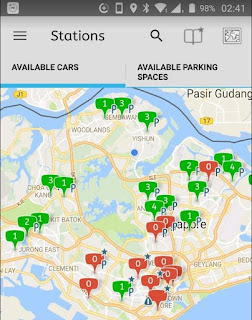
BlueSG vs CarShare Since 12 Dec 2017, the first electric car rental has started business in Singapore and there is no need to pay for petr...